Can a robot vacuum cleaner vacuum carpets?
Cleaning floors at home is a time-consuming and energy-intensive task. Therefore, individuals who spend a large part of their day at work or school may need an assistant to do this job properly. Robot vacuum cleaners, designed for this purpose, clean the floors of living spaces thoroughly and flawlessly. When it comes to carpet cleaning, however, many users have questions about the cleaning capacity of these smart devices. Robot vacuum cleaners do have carpet cleaning features. In the rest of this article, you can find answers to the most frequently asked questions about the carpet cleaning performance of robot vacuum cleaners.
Can a robot vacuum cleaner vacuum thick carpets?
Robot vacuum cleaners cannot climb over carpets of a certain thickness. Therefore, when choosing a robot vacuum cleaner, in addition to details such as price, dust container size, and remote access, it is necessary to focus on the device’s mobility. Robot carpet cleaning models on the market can easily climb over carpets that are 2-3 centimeters high. After transitioning from hard floors to carpet, the robot measures the depth of the carpet and adjusts the suction power accordingly.
You might find that your robot vacuum cleaner, which performs floor cleaning in your living spaces according to your expectations, is having trouble with a newly purchased carpet. Dark-colored carpets, in particular, can cause detection problems in the robot vacuum cleaner, even if they are of ideal thickness. Similarly, the pile structure of the carpet can also prevent the vacuum cleaner from reaching the carpet. When you encounter such situations, you can change the operation of some of your robot’s sensors using the software interface. If this is not possible, you can manually guide the robot to vacuum the carpet.
How does a robot vacuum cleaner clean carpets?
Robot vacuum cleaners clean carpets using their main brush. In rectangular-designed robots, the main cleaning brush is positioned approximately 20 millimeters from the front. In circular-shaped smart vacuum cleaner robots, the brush is placed approximately 100 millimeters behind the front. After the robot reaches the carpet, it collects dust and dirt with its main cleaning brush and vacuums it into its container. Because robot vacuum cleaners do not use hoses like classic vacuum cleaners, the vacuuming effect is powerful enough to pick up even the smallest particles.
When buying a robot vacuum cleaner, you should look for models with advanced brush units. The more advanced the brush unit, the higher the cleaning power. Furthermore, there’s no need for extremely high suction power. As a result, the device can utilize the airflow generated by the fan much more effectively. Consequently, it can clean your home’s floors in the most efficient way.
Can robot vacuum cleaners climb on carpets?
Robot vacuum cleaners are designed to easily navigate both hard and carpeted surfaces, fulfilling their primary function according to user expectations. While following its route on a hard surface, the robot detects a carpet and measures its height using its sensors. If the carpet height does not exceed 2-3 centimeters, the robot continues vacuuming. Otherwise, it goes around the carpet and continues its path on the hard surface.
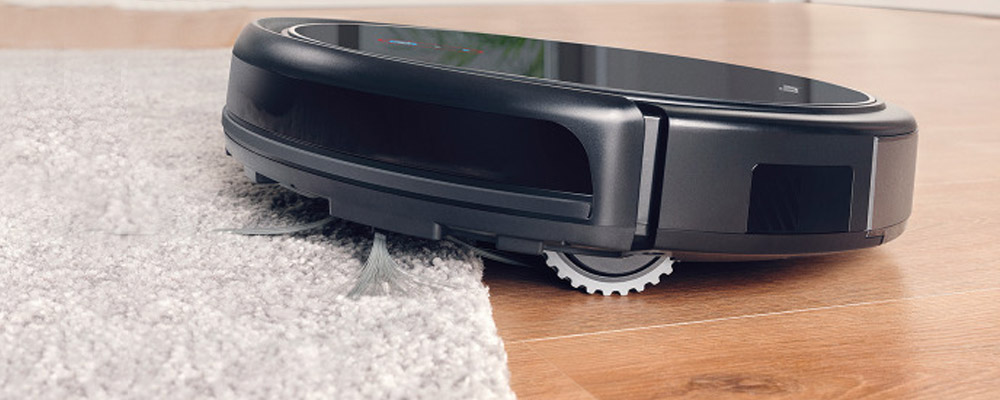
Smart robot vacuum cleaners use navigation systems to navigate an area. This system allows the device to flawlessly follow the route stored in its memory. However, the height of objects the robot encounters can cause disruptions in this route. You can review the saved route from your device’s mobile application and easily identify if any carpets have been missed.
Does a robot vacuum cleaner clean carpets?
The mopping feature is included in smart vacuum cleaners only for use on hard floors. This means that if a robot vacuum cleaner with a mop function encounters a carpet while the mopping feature is active, it will either skip the carpet or switch to the sweeping function. Most robot vacuum cleaners with mops on the market today handle the transition from hard floors to carpets in two ways. Some models automatically retract the mopping attachments into their containers. Others require manual adjustment. If you choose a device with the “No Mop Zone” feature during purchase, you won’t have to check your device every time. This feature automatically disables the mopping function on delicate areas like carpet surfaces.
Can a robot vacuum cleaner clean shaggy carpets?
Shaggy carpets , due to their structural characteristics, can cause some problems in homes using smart robot vacuum cleaners. For example, the height of the carpet may prevent the robot vacuum cleaner from reaching it. This problem can be easily solved by lifting the robot and placing it on the carpet. However, after such an intervention, it is worthwhile to observe whether the carpet detection feature of the robot vacuum cleaner is working properly. This is because the complex pile structure of shaggy carpets can make it difficult for the carpet recognition feature to activate. Furthermore, because the device is lifted, the navigation information it has stored up to that point may be reset. After the memory is erased, the device may behave as if it is starting the cleaning process from scratch. Therefore, time and energy loss may occur.
Can a robot vacuum cleaner clean black carpets?
The color black can cause detection problems for robotic carpet cleaners. The main reason for this is the fall detection sensors built into the robot. These sensors, which are activated based on the reflection of laser beams from the floor, lose their depth perception in dark areas. The smart device perceives the surface of the black carpet as a high point. Consequently, it does not clean these areas.
There are two ways to overcome this problem. You can cover the sensor areas with tape. This way, the device won’t be able to distinguish colors when it encounters the carpet, and if the thickness is within the ideal dimensions, it will continue cleaning. Alternatively, you can disable the sensors via the device’s software interface. However, before using this method, it’s advisable to check if there are any high places along the device’s path where it might fall and be damaged. If there is a high place, you can activate the device’s virtual wall feature.
Do Robotic Vacuum Cleaners Damage Carpets?
Manufacturers design robot vacuum cleaner models to avoid damaging both carpets and hard floors. However, certain precautions should be taken during use to avoid problems. For example, a robot vacuum cleaner, most functions of which are manually controlled, might unintentionally move from hard floors to carpets while in floor mopping mode. Consequently, all the dirt accumulated on the attachment up to that point will transfer to the carpet.
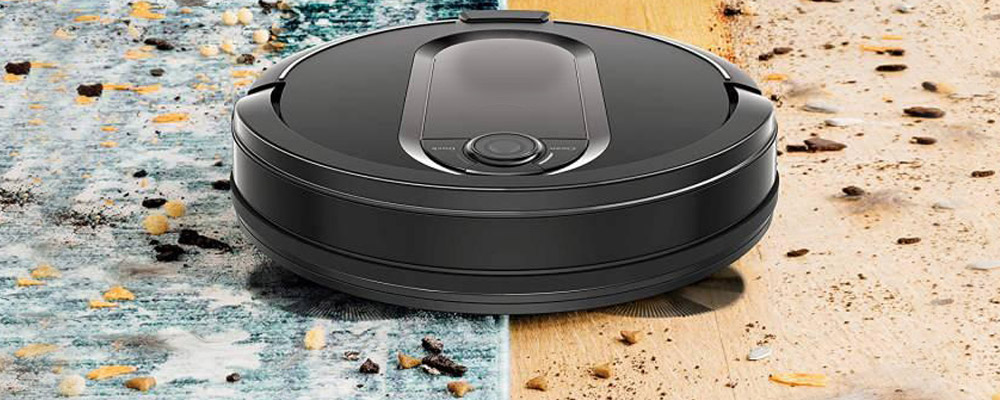
However, if the model you are using has carpet recognition, there is no need to worry about this. Because when the device detects that it is approaching a carpet, it automatically deactivates the mop mode and switches to the vacuuming function. Some models can even change their route to pass by the carpet while this mode is active. Mid-range and high-end models can also adjust the vacuum power according to the carpet’s structure. This eliminates the possibility of damaging your valuable carpet.
How to Clean Fringed/Trimmed Rugs with a Robotic Vacuum Cleaner?
Another concern for individuals considering using a robot vacuum cleaner is cleaning fringed carpets. Depending on the weight of the carpet or rug, and especially the length of the fringes, the sensors and brush assembly of robot vacuum cleaners can detect the fringes and tassels.
However, thin and lightweight fringed rugs can pose a problem for the robot vacuum cleaner’s roller brush. The fringes can get caught and jammed in the brush, resulting in the rug being dislodged. Additionally, if the fringes on your fringed rugs exceed 5 cm in length, the robot vacuum cleaner will get caught in them and be unable to perform its function.
My robot vacuum cleaner is stuck in the carpet fringe. What should I do?
If your fringed rug or carpet has been in your home for generations and you can’t bear to part with it, there are still a few solutions you might consider. You could tape the fringes to the floor while your robot vacuum is running, or you could set your robot’s map without allowing it to detect the rug fringes (if they’re only on two sides) during the identification process.
Should detergent be added to a robot vacuum cleaner?
Some users believe they can achieve much better results by adding detergent to the device’s water tank. However, cleaning liquids like detergent or vinegar have an abrasive effect on plastic parts. Therefore, adding any cleaning agent to the water tank may cause the vacuum cleaner to malfunction. To avoid this, which is outside the warranty coverage, it is necessary to ensure that only drinking water is used in the tank. If this detail is not taken into account and the tank is filled with tap water, there is a risk of limescale buildup. The limescale that begins to accumulate in the tank will eventually clog the small channels, preventing water flow. This situation, just like the use of cleaning materials, negatively affects the lifespan of the vacuum cleaner.